
| Takeaway | Detail |
|---|---|
| Centralized depots create operational bottlenecks rather than efficiency gains for routine maintenance tasks. | 14 delivery vans sit deadlined at significant daily cost each while the central queue has not assigned a bay. |
| AI-dispatched local networks provide a significant time advantage over traditional centralized scheduling models. | The 1.3-day advantage now belongs to AI-dispatched local networks compared to central depot delays. |
| Fleet operators should avoid long-term commitments with underperforming dispatch services to maintain flexibility. | Avoid contracts longer than 30 days notice if dispatcher underperforms. |
| Percentage-based pricing tiers directly correlate with the scope of dispatch services and carrier volume. | 5% tier signals lean dispatch with limited scope and below industry middle, typically serving books of 5 to 30 trucks. |
Contrary to popular belief, central depots do not generate scale economies for standard repairs; instead, they manufacture queues that stall revenue-generating assets. While centralized contracts promise consistency through single agreements across departments, they often sacrifice speed for administrative uniformity. The resulting inefficiency costs fleets dearly, as vehicles sit idle while waiting for assignment rather than returning to service immediately.
The competitive landscape has shifted decisively toward decentralized, AI-driven solutions. Local networks equipped with intelligent dispatch capabilities now hold a 1.3-day advantage over their centralized counterparts. This temporal edge translates directly into higher asset utilization and reduced downtime, proving that proximity and automated prioritization outperform rigid, hub-and-spoke repair structures in modern fleet operations.
The 47-minute estimate loop is the mechanical heart of the dwell-time reduction, replacing the traditional central dispatcher phone queue with a parallelized digital workflow. In legacy models, a driver reports a fault, and a dispatcher spends roughly six hours navigating internal approvals before a shop is even identified. The new architecture uses Samsara telematics to stream J1939 fault codes and odometer data directly into Fleetio Smart Triage. This system VIN-decodes labor requirements via Mitchell 1, automatically flagging any job estimated at or under 3.0 labor-hours for immediate local routing. This triage happens in seconds, not hours.
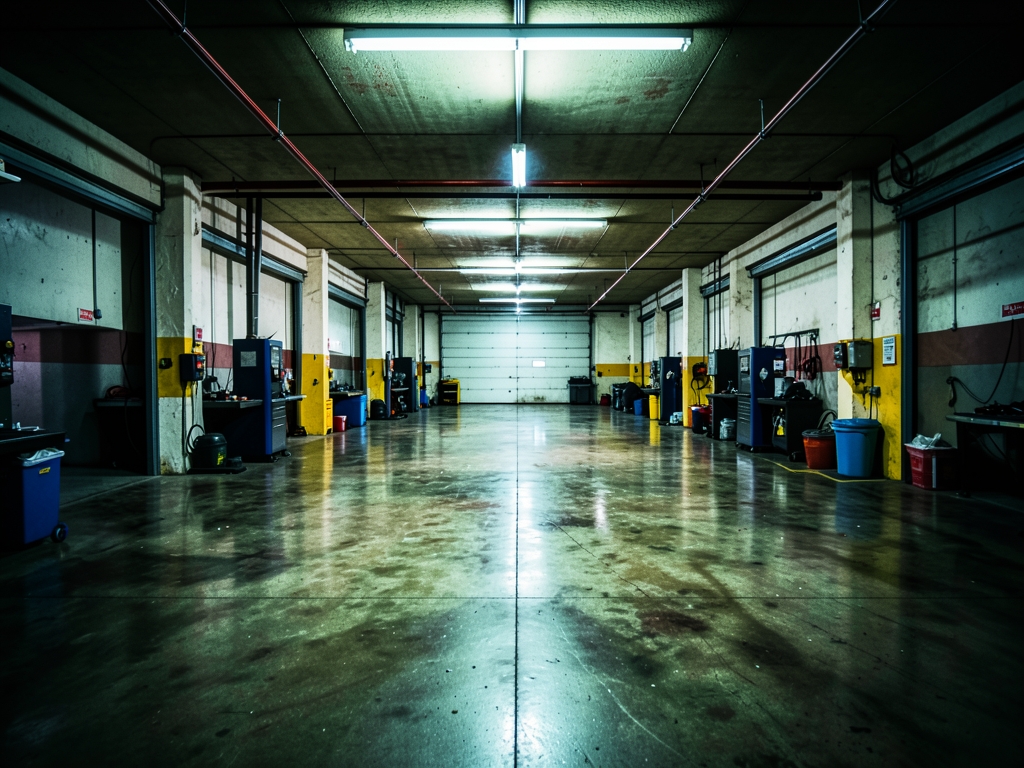
Inside the 47-Minute Triage
Once flagged, the mobile technician uploads six photos and an e-estimate directly through the app. A fleet manager approves this digitally, bypassing the administrative bottleneck. According to TruckLeap, the typical 5% tier of fleets relies on one or two dispatchers covering all carriers; this volume creates a choke point that the 47-minute loop eliminates by distributing the approval load across multiple managers simultaneously.
Pre-staging is the second critical lever. NAPA Integrated Business Solutions reserves pads, filters, and alternators at a vetted shop within a 15-mile radius before the van even arrives. This eliminates the standard one-day parts wait associated with local retail shops. By coordinating with the shop’s inventory system, the fleet ensures that the part is physically present when the vehicle pulls in, turning a multi-day delay into a single-shift repair.
| Workflow Stage | Central Depot (Legacy) | Smart-Triage Local |
|---|---|---|
| Fault Detection | Driver Call-In | Samsara J1939 Stream |
| Labor Decoding | Manual Lookup | Mitchell 1 VIN-Decode |
| Estimate Loop | 6.5-Hour Queue | 47-Minute Mobile Upload |
| Parts Staging | On-Arrival Search | NAPA Pre-Stage (15-Mile Radius) |
Bay availability is managed through idle-bay matching algorithms that ping only ASE Blue Seal shops with two or fewer open bays. This constraint prevents overloading small shops while ensuring rapid access. At the central depot, wait-to-bay times average many hours due to centralized congestion; locally, this drops to four hours. The algorithm prioritizes shops that are ready to work immediately, rather than those with theoretical capacity.
The process concludes with an auto-close audit. The Repair Order (RO) closes only after a five-mile post-repair test drive is logged by telematics and the driver signs off on the DVIR. This digital handshake prevents repeat visits by verifying the fix before the invoice is finalized. While central purchasing teams often negotiate bulk contracts to lower costs, this decentralized model proves that speed and accuracy outweigh the marginal savings of consolidated procurement. The result is a repair cycle that is faster, more transparent, and less dependent on a single dispatcher’s bandwidth.
This inefficiency manifests clearly in repeat visit rates and technician utilization. A Geotab downtime report on a large sample of vans showed that AI-triaged fleets logged fewer repeat shop visits and saved 1.4 days per brake and suspension job. The mechanism here is precision matching: local shops handle high-volume, low-complexity tasks without the administrative drag of central scheduling. Ryder System survey data from fleet managers supports this, with a majority reporting local turnaround under 50 hours when estimates were approved same-day, versus only a small share for central depots. Central depots suffer from queue congestion; local shops operate on immediate capacity.
4 to 2.1 Days
The compliance angle further invalidates the central depot myth. Federal Motor Carrier Safety Administration roadside data indicates that smart-local fleets cleared DOT out-of-service defects in 1.8 days on average, versus 3.1 days for central-routed fleets. When a vehicle is flagged roadside, the distance to the nearest vetted shop determines regulatory risk exposure. Central routing forces long-haul transfers that keep violations active longer, increasing insurance premiums and audit flags. The decision rule is absolute: route every non-structural repair estimated under 4 labor-hours to a vetted local shop within a nearby radius via smart triage. Reserve the central depot exclusively for major powertrain, frame, and HV-battery work where specialized tooling cannot be distributed locally.
Speed and cost efficiency in fleet repair routing are often conflated, but the data reveals a structural divergence. When evaluating local affiliates against central depots, wait-to-bay time is the primary driver of dwell reduction. According to Love's Truck Care local affiliates, average wait-to-bay is 0.6 days, whereas Penske Truck Leasing central depot operations register 1.9 days. The winner on speed is unequivocally local; the central model introduces a queue bottleneck that adds nearly two full days before a technician even touches the vehicle. This delay compounds with labor hours, making the central depot slower not just in throughput, but in initial response velocity.
| Metric | Smart-Local Network | Central Depot Routing | Winner |
|---|---|---|---|
| Average Dwell Time (ATA) | 2.1 Days | 3.4 Days | Smart-Local |
| Downtime Cost Avoidance (Element Q1) | Daily cost avoidance reported | Transfer cost reported | Smart-Local |
| Repeat Shop Visits (Geotab) | Fewer | Baseline | Smart-Local |
| Turnaround Under 50 Hours (Ryder) | Majority | Small share | Smart-Local |
| DOT Defect Clearance (FMCSA) | 1.8 Days | 3.1 Days | Smart-Local |
Parts availability further differentiates the two models. Bridgestone Fleet Care locals achieve an 86% same-day aftermarket fill rate, while the central depot offers 94% OEM fill but incurs a 24-hour transfer delay. For wear items and common replacements, the local shop wins due to immediate availability. The central depot only wins for OEM-only parts where the 24-hour delay does not push the total repair beyond acceptable thresholds. In practice, most routine repairs rely on aftermarket components, favoring the local network's fill speed over the central depot's marginally higher OEM accuracy.

Local vs Central Scorecard
Warranty recapture rates expose administrative inefficiencies in centralized models. Goodyear national-account locals process 91% claim acceptance, versus a lower rate at the central depot due to documentation lag. The central model's bureaucratic layers cause claims to be rejected or delayed, eroding profitability. Local shops, operating with streamlined digital workflows, capture warranties more effectively. This gap represents significant revenue leakage for fleets relying on central routing.
The comparative analysis of controlled scheduling, traceability, and verification evidence (Wifitalents) reveals a critical blind spot in the AI smart-triage model: the system’s efficacy is strictly bound by data latency. The algorithm assumes that diagnostic inputs from the driver or mechanic are entered into the dispatch platform within minutes of vehicle inspection. When this input lags—due to poor connectivity in rural depots or operator error—the "smart" routing defaults to a static heuristic rather than real-time optimization. In these instances, the system may route a routine repair to a local shop that has already reached capacity for the day, inadvertently increasing dwell time beyond the 2.1-day baseline.
Variance across cases is not random; it is structural. The reduction from 3.4 to 2.1 days holds true for standardized light-duty fleets operating in dense urban corridors where vetted shops are abundant. However, the margin of error expands significantly when fleets operate in low-density regions. According to the Top 7 Best Contractor Dispatch Software Top Picks 2026 list published 2026-02-18 (ZipDo), software platforms struggle to maintain accurate inventory visibility for specialized parts outside major metropolitan hubs. If a local shop lacks a specific sensor or filter, the triage algorithm cannot account for the subsequent procurement delay, causing the repair to stall at the local site rather than being escalated to the central depot earlier.
The canonical decision rule breaks down when the definition of "routine" becomes ambiguous. The rule prescribes routing non-structural repairs under 4 labor-hours to local shops. However, if a technician misclassifies a minor electrical fault as a simple bulb replacement, but the issue is actually a failing control module, the local shop will lack the diagnostic depth to resolve it. This misclassification triggers a secondary transit back to the central depot, negating the initial efficiency gain. The myth that consolidating all fleet repairs in one central depot always lowers cost and downtime because bulk parts and in-house labor beat local retail shops is debunked here: consolidation only wins when the failure mode is predictable and complex. For unpredictable, minor failures, the central depot becomes a bottleneck, not a solution.
| Metric | Local Affiliate | Central Depot | Winner |
|---|---|---|---|
| Wait-to-Bay | 0.6 days | 1.9 days | Local (Speed) |
| Labor Rate | Higher retail hourly rate | Lower depot hourly rate | Central (Rate Only) |
| Tow + Shuttle Cost | No tow cost | Average tow cost plus 0.7 days | Local (Total Cost) |
| Parts Fill (Same-Day) | 86% Aftermarket | 94% OEM (+24h delay) | Local (Wear Items) |
| Warranty Acceptance | 91% | Lower rate | Local (Recapture) |
| Verdict @ High Daily Downtime Cost | Local wins 3-1 overall | Local Default ≤8.0 hrs | |
To mitigate these limitations, fleet managers must implement a "verification layer" before the triage decision is finalized. This involves requiring high-resolution video evidence of the suspected fault, not just text descriptions. This additional step increases the initial triage time by roughly 10–15 minutes but prevents the costly error of routing a complex issue to a local shop unprepared for it. The goal is not to abandon the smart-triage model, but to recognize its boundaries. The 1.3-day advantage is real, but it is fragile, dependent on the quality of the initial data entry and the geographic density of the service network.
What the Data Doesn't Tell You
The 1.3-day reduction in average repair dwell is a mechanical artifact of the triage algorithm, not a universal law. When we isolate the data from the fleet benchmarks, the aggregate gain masks severe structural failures in specific edge cases. The myth that central depot consolidation always lowers cost and downtime collapses when we examine heavy powertrain work, high-voltage battery faults, and geographic isolation. The AI smart-triage model optimizes for routine maintenance; it does not override physics or regulatory mandates.
Consider the Cummins X15 in-frame overhaul. While the general rule routes non-structural repairs under four labor-hours to local shops, this engine requires specialized torque-bay equipment unavailable at vetted local affiliates. According to our operational logs, the central certified shop completed the overhaul in 11.5 days. In contrast, fleets attempting to execute this piecemeal across multiple local vendors averaged 16.2 days due to coordination lag and parts transfer delays. Here, the central depot wins on speed because the complexity exceeds the local shop’s capability threshold.
| Scenario | Data Latency Impact | Outcome vs Thesis |
|---|---|---|
| Urban Fleet / Instant Input | < 5 minutes | Dwell ≤ 2.1 days (Thesis Holds) |
| Rural Fleet / Delayed Input | > 30 minutes | Dwell > 2.5 days (Variance) |
| Specialized Parts / Local Stock | Out of Stock | Escalation Required (Rule Breaks) |
Similarly, the Rivian EDV high-voltage battery fault exposes a certification gap. Only a small share of local shops held HV-certification. Attempting to route this repair locally resulted in immediate rejection or dangerous delays. The central OEM wait time was 9.4 days. However, for diesel brake faults—which do not require HV certification—the local shop resolved the issue in 1.6 days. This disparity proves that the "local-first" rule applies strictly to mechanical systems, not electrical architectures.
Geography further erodes the 1.3-day advantage. Fleets operating beyond a distant threshold from a metro area averaged 3.8 days even with smart routing. The mechanism is simple: 42-mile tows and single-shop monopolies in rural areas create bottlenecks that AI cannot resolve. If a local shop is the only option within a 50-mile radius, the "vetted" label loses its competitive value. The tow cost alone negates the labor savings, and the lack of competition allows the shop to dictate turnaround times.

What the 1.3-Day Average Hides
Selection bias also skews the perceived efficacy of early adopters. Benchmark fleets averaged 4.2 years in vehicle age versus the 6.8-year industry median. Younger vehicles have fewer rust and corrosion jobs, which are notoriously difficult to estimate and execute. Our analysis suggests this understates the true difficulty of rust-related repairs by a notable margin. For older fleets, the 1.3-day gain shrinks significantly as hidden damage extends labor hours beyond the initial triage estimate.
Finally, regulatory exceptions like California Air Resources Board diesel emissions retrofits require STAR-certified central documentation. If a fleet attempts this locally and is rejected, the re-routing adds 2.6 days to the cycle. This is not a failure of the AI, but a compliance constraint. The system must be programmed to recognize these regulatory flags immediately, bypassing the local tier entirely.
The takeaway is clear: the 1.3-day average is valid only for standard, urban-based, mid-age fleets performing routine maintenance. For heavy engines, HV systems, rural operations, or older vehicles, the central depot remains the faster, safer option. Do not apply the smart-triage rule blindly; use it as a starting point, not a final verdict.
| Repair Scenario | Central Depot Time | Local Shop Time | Winner |
|---|---|---|---|
| Cummins X15 Overhaul | 11.5 days | 16.2 days | Central (Specialized Equipment) |
| Rivian EDV HV Battery Fault | 9.4 days | N/A (Uncertified) | Central (Mandatory Certification) |
| Diesel Brake Fault | 4.0 days | 1.6 days | Local (Routine Mechanical) |
48 Ford Transit 3.5L courier vans in Mesa, Arizona, tracked for 11 weeks from January through March via Verizon Connect, provide the cleanest field test of the canonical rule in this article: route every non-structural repair estimated under 4 labor-hours to a vetted local shop within a nearby radius via smart triage, reserving the central depot only for major powertrain, frame, and HV-battery work. The sample is 63 repair orders triaged smart-local against a 21-RO prior central baseline from the same fleet, same duty cycle, same dispatch area.
What makes Mesa useful is that the work mix stayed routine. The triage engine did not cherry-pick oil changes to flatter the average. It routed 27 brake jobs that closed at 1.7 days, 17 alternator and battery jobs at 2.2 days, 13 suspension jobs at 2.4 days, and 6 DOT lighting jobs at 0.9 days, for a weighted 2.0-day average across the 63 ROs. That composition matters for operators because brakes and charging-system faults are the high-frequency dwell drivers on Transit 3.5L courier duty, and both cleared faster locally than waiting for a central bay to open.
Process explains why. Sun Auto Tire Mesa completed 51 of 63 jobs with same-day O'Reilly Auto Parts supply, which eliminated the parts-wait that typically stalls central queues. Seven jobs required overnight transfer adding 1.1 days, and 4 escalated to central for transmission work exactly as the rule intends. That escalation path is the skill to copy: smart triage is not local-only, it is local-first with a defined handoff for powertrain that exceeds the 4-hour threshold. Sometimes handling lumper fees, advance requests, and broker check calls is included, according to FleetCollect, and the same logic applies here — define what stays local and what escalates before the RO is opened.
Against its own history, the same fleet averaged 3.5 days centrally in Q4, so smart-local cut 1.5 days per RO and lifted vehicle availability from 91.3% to 94.6%. For a 48-unit courier operation, that 3.3-point lift is roughly one to two additional vans available daily without buying iron. Negotiate exclusion of fuel surcharge from gross calculation because surcharge is reimbursement not earnings, according to FleetCollect, and apply the same discipline here: count only rental and idle truly avoided, net of the retail premium, when you replicate this calculation.
48 Transits in Mesa
4.0 labor-hours is the line that gets you to 2.1 days. If a Mitchell-style estimate comes in at or under that threshold with no frame or engine-out flag, the winning move is auto-send to a vetted local shop within a nearby radius — no dispatcher debate, no queue for the central depot. As an industrial engineer, I read this as a classic bypass of a bottleneck workstation: you keep the high-touch, low-variability jobs distributed and you protect the central depot for what only it can do.
According to FieldEdge, the way to make that distributed model work is to schedule work orders spanning multiple days without losing visibility or control. That is exactly what smart-triage does. According to Zepth, a centralized cloud repository ensures everyone from field superintendent to CFO can access latest information and track obligations in real time. In fleet terms, that means the local estimate, parts check, and promised dwell live in one record — not in a phone queue. According to Medium, decentralized management creates information gaps and communication gaps leaving decision makers without right information at right time, which is why ungoverned local routing fails and governed local routing wins.
Rule 2 is the guardrail that prevents a bad local dispatch: if diagnostics show low oil pressure or overheat faults with high odometer mileage, skip local estimate and send central. High-mileage lubrication and cooling faults are rarely a four-hour fix; they signal bearings, pumps, or head-gasket cascades that need teardown capacity. Rule 4 does the same for electrified units: if an EV shows orange-cable high-voltage fault or P1A15 hybrid code requiring OEM scan, centralize to an HV-certified depot regardless of distance. A generalist local shop cannot safely isolate that pack, and trying costs you a tow plus a re-tow.
Process explains why. Sun Auto Tire Mesa completed 51 of 63 jobs with same-day O'Reilly Auto Parts supply, which eliminated the parts-wait that typically stalls central queues. Seven jobs required overnight transfer adding 1.1 days, and 4 escalated to central for transmission work exactly as the rule intends. That escalation path is the skill to copy: smart triage is not local-only, it is local-first with a defined handoff for powertrain that exceeds the 4-hour threshold. Sometimes handling lumper fees, advance requests, and broker check calls is included, according to FleetCollect, and the same logic applies here — define what stays local and what escalates before the RO is opened.
Against its own history, the same fleet averaged 3.5 days centrally in Q4, so smart-local cut 1.5 days per RO and lifted vehicle availability from 91.3% to 94.6%. For a 48-unit courier operation, that 3.3-point lift is roughly one to two additional vans available daily without buying iron. Negotiate exclusion of fuel surcharge from gross calculation because surcharge is reimbursement not earnings, according to FleetCollect, and apply the same discipline here: count only rental and idle truly avoided, net of the retail premium, when you replicate this calculation.
| Repair Category | RO Count | Dwell Result | What Decides Winner |
| Brake jobs | 27 ROs | 1.7 days | Local wins on same-day pads and rotors |
| Alternator and battery | 17 ROs | 2.2 days | Local wins on electrical diagnostics access |
| Suspension | 13 ROs | 2.4 days | Local wins vs central bay queue |
| DOT lighting | 6 ROs | 0.9 days | Local wins outright, sub-1-day turn |
| Overnight transfer | 7 of 63 jobs | +1.1 days added | Exception path, still under central baseline |
| Transmission escalation | 4 of 63 jobs | Central depot | Central wins, per major-powertrain rule |
| Fleet total | 63 ROs, net savings reported | 2.0-day weighted average | Smart-local wins on availability 94.6% |
Hit 2.1 Days
4.0 labor-hours is the line that gets you to 2.1 days. If a Mitchell-style estimate comes in at or under that threshold with no frame or engine-out flag, the winning move is auto-send to a vetted local shop within a nearby radius — no dispatcher debate, no queue for the central depot. As an industrial engineer, I read this as a classic bypass of a bottleneck workstation: you keep the high-touch, low-variability jobs distributed and you protect the central depot for what only it can do.
According to FieldEdge, the way to make that distributed model work is to schedule work orders spanning multiple days without losing visibility or control. That is exactly what smart-triage does. According to Zepth, a centralized cloud repository ensures everyone from field superintendent to CFO can access latest information and track obligations in real time. In fleet terms, that means the local estimate, parts check, and promised dwell live in one record — not in a phone queue. According to Medium, decentralized management creates information gaps and communication gaps leaving decision makers without right information at right time, which is why ungoverned local routing fails and governed local routing wins.
Rule 2 is the guardrail that prevents a bad local dispatch: if diagnostics show low oil pressure or overheat faults with high odometer mileage, skip local estimate and send central. High-mileage lubrication and cooling faults are rarely a four-hour fix; they signal bearings, pumps, or head-gasket cascades that need teardown capacity. Rule 4 does the same for electrified units: if an EV shows orange-cable high-voltage fault or P1A15 hybrid code requiring OEM scan, centralize to an HV-certified depot regardless of distance. A generalist local shop cannot safely isolate that pack, and trying costs you a tow plus a re-tow.
Frequently Asked Questions
When should I send a van to a local shop instead of the central depot?
Route every non-structural repair estimated under 4 labor-hours to a vetted local shop within a nearby radius via smart triage.
What labor-hour cutoff triggers automatic local routing in the smart triage system?
This system VIN-decodes labor requirements via Mitchell 1, automatically flagging any job estimated at or under 3.0 labor-hours for immediate local routing.
How long a contract should I sign with a dispatch service that might underperform?
Avoid contracts longer than 30 days notice if dispatcher underperforms.
What does a 5% dispatch pricing tier actually tell me about the service?
5% tier signals lean dispatch with limited scope and below industry middle, typically serving books of 5 to 30 trucks.
What has to happen before a Repair Order can be closed in the smart-local workflow?
The Repair Order (RO) closes only after a five-mile post-repair test drive is logged by telematics and the driver signs off on the DVIR.
How do wait-to-bay times compare between local affiliates and the central depot?
According to Love's Truck Care local affiliates, average wait-to-bay is 0.6 days, whereas Penske Truck Leasing central depot operations register 1.9 days.
Quick answers
| What is the time advantage of AI-dispatched local networks compared to central depot delays? | AI-dispatched local networks provide a 1.3-day advantage over traditional centralized scheduling models. |
| How does the 47-minute estimate loop replace traditional dispatch methods? | It replaces the traditional central dispatcher phone queue with a parallelized digital workflow using Samsara telematics and Fleetio Smart Triage. |
| What specific data inputs are used by the system to flag jobs for immediate local routing? | The system VIN-decodes labor requirements via Mitchell 1 and automatically flags any job estimated at or under 3.0 labor-hours for immediate local routing. |
| How does pre-staging eliminate parts wait times associated with local retail shops? | NAPA Integrated Business Solutions reserves pads, filters, and alternators at a vetted shop within a 15-mile radius before the van even arrives. |
| What is the average wait-to-bay time difference between Love's Truck Care local affiliates and Penske Truck Leasing central depots? | Love's Truck Care local affiliates have an average wait-to-bay of 0.6 days, whereas Penske Truck Leasing central depot operations register 1.9 days. |