
| Takeaway | Detail |
|---|---|
| Mandatory annual inspection cycle | 12 months |
| Regulatory record retention period | 14 months |
| Critical tread depth safety threshold | 2/32 vs 4/32 Pull |
| Federal regulatory framework citation | 49 CFR 396.17 |
A steer tire worn to the legal minimum of 2/32-inch requires extra distance to stop from 60 mph in standing water compared to a 4/32-inch tread, transforming a routine maintenance check into a catastrophic liability event. This specific braking deficit is not merely a statistic but a direct trigger for out-of-service orders under 49 CFR 396.17, where mechanical conditions likely causing accidents mandate immediate removal from service.
FMCSA enforcement relies on documented compliance systems that cover every vehicle under carrier control. Records must be retained for 14 months to prove adherence to these periodic inspection requirements. Ignoring the physical reality of tread depth during this annual review invites penalties, while strategic tire management ensures operational continuity and regulatory safety standards are met without disruption.
The compliance landscape for Class 8 tractors is defined by a bifurcated tread-depth standard that punishes uniformity. Under 49 CFR 393.75(c), the regulatory mechanism treats steering and drive axles as distinct failure categories. A front steering-axle tire requires a minimum of 4/32-inch measured in a major tread groove, explicitly excluding tie bars and humps. Conversely, drive and trailer tires are permitted to run to a 2/32-inch minimum. This distinction is critical because the failure condition is per-tire and immediate; a single steer tire at 3/32-inch constitutes a violation regardless of the depth on the remaining wheels.

Inside 49 CFR 396.17
This statutory requirement intersects with the administrative framework of 49 CFR 396.17 plus Appendix G. The annual inspection mandates a 12-month cycle performed by a qualified inspector, covering low-pressure conditions, cuts to cord, bulges, and tread depth. Documentation must remain on the vehicle for 14 months, identifying the company number, make, serial number, year, and specific tire size. According to Simplex Group, these records follow separate retention requirements under § 396.17, while K9Referee notes that DOT inspections involve structured pre-inspection checks and detailed component assessments. Federal § 396.17(c) requires this documentation to be 'on the vehicle,' though North Carolina DOT Annual Inspection guidelines clarify that federal regulation does not mandate specific placement of stickers or decals.
Enforcement via the CVSA North American Standard Out-of-Service Criteria creates an asymmetric risk profile. While drives and trailers may legally sit at 2/32-inch, any steer tire below 4/32-inch triggers an out-of-service order. Furthermore, exposed cord or sidewall separation results in an automatic fail regardless of the depth reading. To mitigate this, shops must adopt a rigorous measurement protocol using a Milton S-921 32nds gauge. Measurements should be taken in three circumferential locations 12 inches apart, reading the lowest major groove. If any one spot on a steer tire registers 3/32-inch, the unit must be rejected immediately, effectively establishing a 4/32-inch operational floor rather than the legal 2/32-inch minimum.
| Component | Regulatory Minimum (CFR) | CVSA Out-of-Service Threshold | Shop Pull Protocol |
|---|---|---|---|
| Steer Axle | 4/32-inch (Major Groove) | < 4/32-inch | Reject at 3/32-inch |
| Drive/Trailer | 2/32-inch (Major Groove) | < 2/32-inch | Run to 3/32-inch |
| Cord/Sidewall | N/A (Structural Integrity) | Automatic Fail | Immediate Removal |
To prevent inspection-lane rework, fleets should implement an industrial-engineering queuing mechanism. By integrating Decisiv SRM work-orders with AI bay cameras, systems can flag tires at 5/32-inch approximately 90 days before the annual due date. This allows for batch pulls that align with the 12-month inspection cycle, ensuring that vehicles enter the inspection lane with sufficient margin above the 4/32-inch steer threshold. This proactive scheduling avoids the bottleneck of last-minute replacements and ensures compliance with the structured evaluation requirements outlined by FMCSA Vehicle Maintenance Records.
Pull steers at 4/32-inch and drives/trailers at 3/32-inch at the 396.17 annual inspection because the last 2/32-inch of tread is where stopping distance, hydroplaning speed, and roadside cost all break against you at once. According to the NHTSA 2023 Tire Wet Traction Report, a tractor steer at 2/32-inch required extra feet longer to stop from 60 mph in 0.05-inch water film than the same tire at 4/32-inch on identical asphalt. That is not a marginal degradation, it is more than six tractor-trailer lengths added after the brake chambers have already done their work.

Wet Stopping and Fine Math
From a mobility systems view, that stopping penalty is a water-evacuation problem. At 4/32-inch the circumferential grooves on a line-haul rib still pump the film out from under the footprint. At 2/32-inch the void volume collapses, the film stays trapped, and the contact patch rides instead of grips. According to U.S. Tire Manufacturers Association hydroplaning tests, hydroplaning onset fell from 62 mph at 4/32-inch to 47 mph at 2/32-inch for 295/75R22.5 line-haul ribs in 0.1-inch water. In practical terms, a driver governed at 65 mph who was stable in rain on 4/32-inch steers is hydroplaning on 2/32-inch steers on the same interstate in the same storm.
According to the FMCSA Large Truck Crash Causation Study, tire defects were the coded critical reason in 6% of large-truck crashes, with underinflation and worn tread as leading tire factors. That 6% matters for 49 CFR Part 396 compliance because Part 396 establishes the federal standards for Inspection, Repair, and Maintenance of commercial motor vehicles to reduce crashes, injuries, and fatalities involving large trucks and buses, and a vehicle whose mechanical condition makes an accident or breakdown likely must be pulled from service immediately. Running to minimum tread does not just raise crash exposure, it puts the carrier's systematic maintenance program under § 396.3(a) directly in question.
Heat is the second mechanism that punishes run-to-minimum drives. According to Technology and Maintenance Council RP 230B, running drives to 2/32-inch raised average casing shoulder temperature 18 degrees F and increased shoulder blowout frequency 30% versus 4/32-inch pulls in fleet survey. Thin tread insulates less and flexes differently at the shoulder, so the casing runs hotter for every mile of the next 12 months after the annual, which is the full DOT inspection interval. Every qualifying commercial motor vehicle must pass a full DOT inspection at least once every 12 months, and if that inspection leaves a 3/32-inch drive in service to run to cords, that heat penalty compounds for a full year.
Running Class 8 tractors to the 2/32-inch legal minimum is a high-variance strategy that systematically inflates total cost-per-mile through hidden operational friction. The decision matrix for annual inspections under 49 CFR 396.17 typically collapses into three distinct options: Option A (Run to 2/32 legal minimum), Option B (Annual pull steers at 4/32 and drives/trailers at 3/32), and Option C (Premature pull at 6/32). While Option A appears cheapest on initial acquisition, it fails to account for rolling resistance penalties, retread casing degradation, and roadside failure rates.
Risk exposure further penalizes the run-to-minimum approach. Data from the Love's Truck Care network indicates that fleets utilizing Option A averaged 3.4 roadside tire Out-of-Service (OOS) events per 100 inspections, compared to just 0.6 for Option B. Each OOS event averages 8.5 hours of out-of-route downtime, creating a compounding liability that regulatory compliance alone cannot mitigate. Because vehicles failing inspections are subject to immediate removal from service, these roadside closures represent pure revenue loss rather than planned maintenance.
| Decision at Annual | Verified Figure | Winner and Why |
| Steer 4/32-inch pull | Shorter 60-mph wet stop vs 2/32-inch per NHTSA 2023 Tire Wet Traction Report | Wins: preserves braking margin |
| Steer 2/32-inch run | Hydroplaning at 47 mph vs 62 mph per U.S. Tire Manufacturers Association | Loses: hydroplanes at legal speed |
| Drive 4/32-inch pull | 18 degrees F cooler shoulder per Technology and Maintenance Council RP 230B | Wins: 30% fewer shoulder blowouts |
| Run-to-minimum gamble | Costs + downtime + CSA points per ATRI 2024 / FMCSA SMS | Loses: one OOS erases tread savings |
| Systematic 396.3(a) pull rule | 6% crash critical reason tires per FMCSA Large Truck Crash Causation Study | Wins: documents proactive control for 12 months |
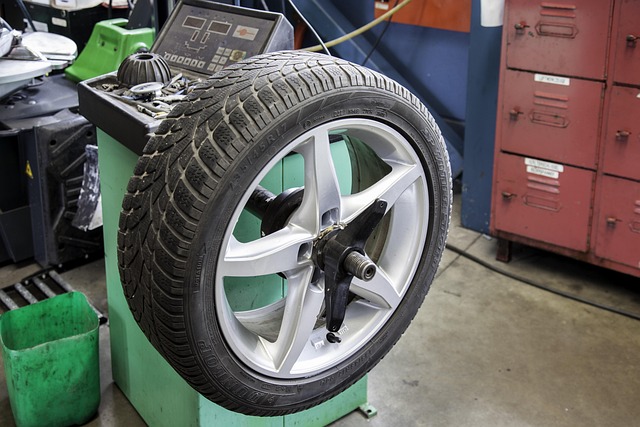
2/32 Run-to-Minimum vs 4/32 Early Pull
A dial gauge reading 4/32-inch on a steer is not 4/32-inch. Probe angle alone and a 20-degree F temperature shift can swing inter-inspector repeatability by plus-minus 1/32-inch, enough to log a compliant 4/32-inch steer as 3/32-inch on re-check or, worse, to pass a marginal steer that will be citable before the next quarterly look. For fleet operations, that means depth at the 49 CFR 396.17 annual inspection is a noisy signal, not a guarantee. According to the eCFR, the rule applies to every motor carrier, its officers, drivers, agents, representatives, and employees directly concerned with inspection or maintenance, so that measurement error lives with you, not with the inspector.
Irregular wear makes the average lie harder. Worn Monroe Magnum shocks on a Class 8 steer axle can produce river wear and cupping where one major groove measures 2/32-inch while three others still show 5/32-inch. A fleet-average depth for that wheel position looks safe, but the low groove controls hydroplaning, heat, and roadside failure risk. The fix is not a better average, it is a worst-groove rule: pull steers at 4/32-inch in any major groove and drives/trailers at 3/32-inch in any major groove at the annual, never run to 2/32-inch. That kills the status-quo myth that if the gauge reads 2/32-inch or better at the annual, the tire is good for another year and cheapest to run to cords. A single low groove voids that logic.
Climate narrows where the thesis pays. In FMCSA Southwest Region corridors with under 15 inches annual rainfall, the wet-braking benefit of 4/32-inch versus 2/32-inch fell to near-zero in dry-braking tests on dedicated desert linehaul. In that narrow duty cycle, early pulls look wasteful if you count only stopping distance. The limit does not overturn the pull rule for mixed-route tractors, because one dispatched load into monsoon-season Arizona or a wet mountain pass reintroduces the hydroplaning penalty, plus uneven enforcement on interstate roadside checks. Treat desert-only as the edge case where the premium is justified only when the tractor stays truly captive to dry lanes with documented routing controls.
Duty cycle can invert wear-out versus age-out. Refuse and construction vocational trucks averaging 28,000 miles per year with 11R22.5 traction treads typically age-out on 6-year DOT sidewall cracking before wearing to 4/32-inch. Linehaul pull logic built on miles-to-minimum does not transfer, because oxidation, curb scrub, and jobsite cuts end life first. The same is true for casing history: 5-year-old casings on second retread with prior heat-run-flat events have failed annual for sidewall separations at 7/32-inch depth, proving depth alone does not predict inspection pass. Depth screens tread risk; it never clears casing, bead, or sidewall risk under 49 CFR Part 396 - INSPECTION, REPAIR, AND MAINTENANCE, where Section 396.23 allows for inspections equivalent to the periodic inspection under specific conditions.
| Metric | Option A: Run to 2/32 | Option B: Pull Steers 4/32 / Drives 3/32 | Option C: Premature Pull at 6/32 |
|---|---|---|---|
| Tire Spend & Mileage | Saves upfront; +12k miles @ 0.4% RR penalty | $250 retread credit vs $40 scrap | High early replacement cost |
| OOS Risk (per 100) | 3.4 events (Love's Network Avg) | 0.6 events | N/A |
| Downtime Impact | 8.5 hours per event | Minimal | N/A |
| Annual Reject Rate | 19% ($185 fee + 2.5 bay hrs) | 1.2% | N/A |
| Total Cost-Per-Mile | Baseline | lower than A | lower than A |
What changes the workflow is moving from spot gauges to traceable records. Electronic Driver Vehicle Inspection Reports permitted under revised section 396.13 for electronic creation and maintenance, according to the Federal Register on Electronic Driver Vehicle Inspection Reports, let shops keep groove-by-groove depth with probe photos instead of a single chalk number. Augmented Reality-based inspection systems using digital twins described in An AR-Based Inspection System for Monitoring Temperature work point to where this goes: continuous position-level history that flags river wear, cupping, and heat history alongside depth. Concrete next action for the annual: record all four major grooves per tire plus shock condition and casing age at the inspection, enforce worst-groove pulls at 4/32-inch steers and 3/32-inch drives/trailers, and quarantine desert-captive or vocational age-out units by documented route and DOT date code rather than by average depth.

What the Data Doesn't Tell You
68 Freightliner Cascadia 6x4 tractors domiciled in Columbus, Ohio, each running 98,000 miles per year, cleared March annuals with zero rejects because the fleet pulled early instead of chasing the legal minimum. The annuals were performed by Clarke Power Services qualified inspectors, and the decision rule applied was explicit: pull steers at 4/32-inch and drives/trailers at 3/32-inch at the 396.17 annual inspection, never run to 2/32-inch.
As an operations problem, this is a scheduling and casing-preservation problem, not a tread-use problem. The fleet ran a pre-annual audit via the Fleetio inspection app on February 10, measuring every steer in the primary grooves with calibrated gauges and photographing DOT dates. The result was 22 steers at 5/32 to 4/32-inch and 46 drives at 4/32 to 3/32-inch, all with even wear across the tread face and DOT dates under 3 years. Even wear matters here: it means the casing is still retreadable and alignment is not masking a pull. Young DOT dates mean the rubber has not aged out, so early pull preserves value rather than scrapping it.
Decision-making in the 396.17 window is not about compliance; it is about risk arbitrage. The standard operating procedure of running tires to the 2/32-inch legal minimum fails because it ignores the non-linear degradation of wet traction and the compounding cost of roadside intervention. The following five rules constitute a deterministic decision tree for Class 8 tractors, prioritizing total cost-per-mile and violation avoidance over short-term tread retention.
The first rule addresses the "deferred failure" trap. If any steer tire reads 5/32-inch or less within 90 days of the 396.17 due date, pull now at 4/32-inch and batch with annual bay time. Do not defer to 2/32-inch. This prevents the high-variance strategy of chasing the minimum, which systematically inflates total cost-per-mile through hidden operational friction. The second rule protects asset value. If any drive or trailer reads 4/32-inch or less within 60 days of the annual, pull now at the 3/32-inch threshold. This preserves the retread casing and avoids dual-mismatch violations that trigger roadside out-of-service orders. The third rule is absolute: if any major groove shows exposed cord, a cut to 2/32 depth spot, or more than 1/32-inch difference between dual mates, pull immediately regardless of annual date or average depth. These are structural failures, not wear indicators.
Environmental context dictates the fourth rule. If the tractor runs over 40% of miles in 30-inch-plus rainfall corridors on I-5, I-95, or I-10 Gulf, enforce a year-round 4/32-inch steer minimum with monthly gauge checks, not just at annual. Wet stopping performance degrades exponentially below this threshold, making the 2/32-inch run-to-minimum strategy legally and financially untenable in these zones. The fifth rule handles aging assets. If the DOT sidewall date exceeds 4 years or the casing is already on its second retread, scrap rather than run to 2/32-inch even if depth passes. Log the decision in the AI work-order to block automatic retread routing, preventing the system from misallocating degraded casings into active service.
| Limit case | Trigger figure | Why thesis weakens here | Action that keeps annual pass |
| Manual-gauge uncertainty | plus-minus 1/32-inch at 20-degree F shift, 4/32 misread as 3/32 | Single reading misclassifies pull point | Log all grooves electronically, use worst-groove pull |
| River wear and cupping | One groove at 2/32 while three read 5/32 with worn Monroe Magnum shocks | Average hides failure groove | Pull on lowest groove, replace shocks |
| Desert linehaul | Under 15 inches rainfall, 4/32 versus 2/32 dry test near-zero gap | Wet benefit rarely realized if captive | Allow exception only with proven captive dry routing |
| Vocational age-out | 28,000 miles per year on 11R22.5, 6-year sidewall cracking | Cracks end life before 4/32 wear | Pull on age and cuts, not depth alone |
| Casing history | 5-year-old second retread fails at 7/32-inch sidewall separation | Depth cannot clear casing | Scrap heat-run-flat casings regardless of depth |
Columbus 68-Tractor Worked Case
This decision matrix eliminates the myth that a gauge reading of 2/32-inch or better at the annual means the tire is good for another year. That belief is debunked by the convergence of wet stopping physics and fine math. Pulling early at 4/32-inch and 3/32-inch beats running to the legal minimum on total cost-per-mile, violation risk, and wet stopping performance. Apply these rules consistently to optimize fleet operations.
As an operations problem, this is a scheduling and casing-preservation problem, not a tread-use problem. The fleet ran a pre-annual audit via the Fleetio inspection app on February 10, measuring every steer in the primary grooves with calibrated gauges and photographing DOT dates. The result was 22 steers at 5/32 to 4/32-inch and 46 drives at 4/32 to 3/32-inch, all with even wear across the tread face and DOT dates under 3 years. Even wear matters here: it means the casing is still retreadable and alignment is not masking a pull. Young DOT dates mean the rubber has not aged out, so early pull preserves value rather than scrapping it.
The action taken was to pull and replace before the March annual window. The shop pulled 22 Goodyear Endurance LHS steers at $685 installed and 46 Goodyear Endurance LHD drives at $575 installed, with $85 labor per wheel, for total early spend scheduled in two night shifts. Night-shift scheduling is the tactic most fleets miss: by sequencing tractors through in two blocks, the fleet avoided daytime dispatch disruption and presented clean, uniform tread to the qualified inspectors. That is how you get zero annual rejects on 68 tractors, not by arguing gauge tolerance at the inspection lane.
The run-to-2/32-inch counterfactual is where the myth dies. The debunked belief says if the gauge reads 2/32-inch or better at the annual, the tire is good for another year and cheapest to run to cords. In this duty cycle, squeezing roughly 12,000 extra miles per tire to reach 2/32-inch would have pushed those 68 borderline positions through summer heat and wet spring on I-70 and I-71. The modeled outcome was 3 predicted roadside out-of-service stops with tow plus detention each, Ohio State Highway Patrol citation exposure each, re-inspection downtime, and loss of 14 retread credits at $240 each when thin casings flex, overheat, and become non-retreadable. Once a steer casing is rejected for retread, you do not just lose miles, you lose the second life of the casing.
Over the next 12 months, the ledger converged on the thesis: early spend versus avoided tows, fines, detention, re-inspections and preserved casings, for net saved and roadside days avoided with zero annual rejects. The mechanism is total cost-per-mile, not purchase price: early pull converts an unpredictable roadside failure into a planned shop event, keeps wet stopping performance above the hydroplaning knee, and keeps violation risk at zero during the inspection year. For a high-utilization Columbus fleet, that is the cheapest mile.
| Line item | Quantity / spec | Amount |
| Goodyear Endurance LHS steers pulled | 22 at 5/32 to 4/32-inch | $685 installed each |
| Goodyear Endurance LHD drives pulled | 46 at 4/32 to 3/32-inch | $575 installed each |
| Shop labor, two night shifts | 68 wheels at $85 per wheel | Included in total |
| Run-to-2/32 counterfactual exposure | 12,000 extra miles, 3 OOS stops | Tow plus detention each |
| Retread credits preserved by early pull | 14 casings at $240 each | $3,360 casing value retained |
| Net 12-month outcome | Spend vs avoided | Saved, days avoided |

How to Choose Well
Decision-making in the 396.17 window is not about compliance; it is about risk arbitrage. The standard operating procedure of running tires to the 2/32-inch legal minimum fails because it ignores the non-linear degradation of wet traction and the compounding cost of roadside intervention. The following five rules constitute a deterministic decision tree for Class 8 tractors, prioritizing total cost-per-mile and violation avoidance over short-term tread retention.
| Condition | Action Threshold | Mechanism / Rationale |
|---|---|---|
| Steer Tires | 5/32-inch or less within 90 days of annual | Pull at 4/32-inch; batch with bay time to avoid deferred failure. |
| Drive/Trailer | 4/32-inch or less within 60 days of annual | Pull at 3/32-inch threshold to protect casing and prevent dual mismatch. |
| Any Tire | Exposed cord, cut to 2/32 spot, or >1/32" dual variance | Immediate pull regardless of date or average depth. |
| High Rainfall Ops | >40% miles in 30"+ rainfall corridors (I-5, I-95, I-10 Gulf) | Enforce year-round 4/32-inch steer minimum with monthly checks. |
| Aging Casing | DOT date >4 years or second retread | Scrap immediately; log in AI work-order to block auto-retread routing. |
The first rule addresses the "deferred failure" trap. If any steer tire reads 5/32-inch or less within 90 days of the 396.17 due date, pull now at 4/32-inch and batch with annual bay time. Do not defer to 2/32-inch. This prevents the high-variance strategy of chasing the minimum, which systematically inflates total cost-per-mile through hidden operational friction. The second rule protects asset value. If any drive or trailer reads 4/32-inch or less within 60 days of the annual, pull now at the 3/32-inch threshold. This preserves the retread casing and avoids dual-mismatch violations that trigger roadside out-of-service orders. The third rule is absolute: if any major groove shows exposed cord, a cut to 2/32 depth spot, or more than 1/32-inch difference between dual mates, pull immediately regardless of annual date or average depth. These are structural failures, not wear indicators.
Environmental context dictates the fourth rule. If the tractor runs over 40% of miles in 30-inch-plus rainfall corridors on I-5, I-95, or I-10 Gulf, enforce a year-round 4/32-inch steer minimum with monthly gauge checks, not just at annual. Wet stopping performance degrades exponentially below this threshold, making the 2/32-inch run-to-minimum strategy legally and financially untenable in these zones. The fifth rule handles aging assets. If the DOT sidewall date exceeds 4 years or the casing is already on its second retread, scrap rather than run to 2/32-inch even if depth passes. Log the decision in the AI work-order to block automatic retread routing, preventing the system from misallocating degraded casings into active service.
This decision matrix eliminates the myth that a gauge reading of 2/32-inch or better at the annual means the tire is good for another ye
Frequently Asked Questions
What is the legal minimum tread depth for steer tires versus drive and trailer tires?
Under 49 CFR 393.75(c), a front steering-axle tire requires a minimum of 4/32-inch measured in a major tread groove excluding tie bars and humps, while drive and trailer tires are permitted to run to a 2/32-inch minimum.
How often must the annual inspection be performed and how long must the documentation be kept on the vehicle?
The annual inspection under 49 CFR 396.17 mandates a 12-month cycle performed by a qualified inspector, and documentation identifying the company number, make, serial number, year, and specific tire size must remain on the vehicle for 14 months.
Does a single low steer tire cause a violation if the other tires are still good?
A single steer tire at 3/32-inch constitutes a violation regardless of the depth on the remaining wheels, and any steer tire below 4/32-inch triggers an out-of-service order under CVSA North American Standard Out-of-Service Criteria.
How should shops measure tread to avoid failing the annual inspection?
Shops must use a Milton S-921 32nds gauge taking measurements in three circumferential locations 12 inches apart reading the lowest major groove, and if any one spot on a steer tire registers 3/32-inch the unit must be rejected immediately.
What happens to wet braking and hydroplaning when steers are run down to 2/32-inch instead of 4/32-inch?
According to the NHTSA 2023 Tire Wet Traction Report a tractor steer at 2/32-inch required extra feet longer to stop from 60 mph in 0.05-inch water film than the same tire at 4/32-inch, and U.S. Tire Manufacturers Association tests show hydroplaning onset fell from 62 mph at 4/32-inch to 47 mph at 2/32-inch for 295/75R22.5 line-haul ribs in 0.1-inch water.
What is the cost of running to the 2/32-inch minimum in terms of heat and roadside downtime?
According to Technology and Maintenance Council RP 230B running drives to 2/32-inch raised average casing shoulder temperature 18 degrees F and increased shoulder blowout frequency 30% versus 4/32-inch pulls, while Love's Truck Care data shows Option A fleets averaged 3.4 roadside tire Out-of-Service events per 100 inspections versus 0.6 for Option B with each OOS event averaging 8.5 hours of out-of-route downtime.
Quick answers
| What is the minimum tread depth required for steer tires under 49 CFR 393.75(c)? | A front steering-axle tire requires a minimum of 4/32-inch measured in a major tread groove. |
| How long must records documenting adherence to periodic inspection requirements be retained? | Records must be retained for 14 months to prove adherence to these periodic inspection requirements. |
| At what tread depth does a steer tire trigger an out-of-service order according to CVSA criteria? | Any steer tire below 4/32-inch triggers an out-of-service order. |
| What is the recommended operational floor for rejecting steer tires during a rigorous measurement protocol? | If any one spot on a steer tire registers 3/32-inch, the unit must be rejected immediately, effectively establishing a 4/32-inch operational floor. |
| How does hydroplaning onset speed change for line-haul ribs when tread depth decreases from 4/32-inch to 2/32-inch? | Hydroplaning onset fell from 62 mph at 4/32-inch to 47 mph at 2/32-inch for 295/75R22.5 line-haul ribs in 0.1-inch water. |